
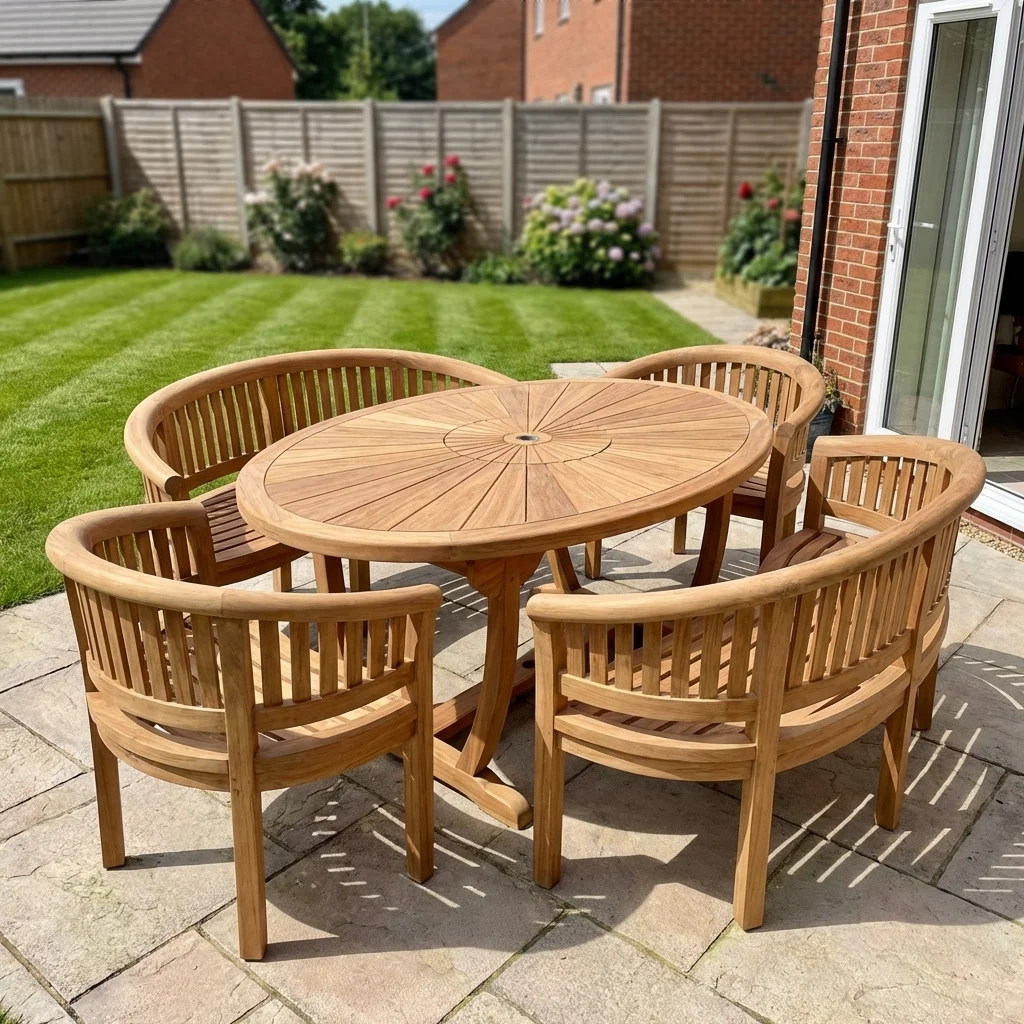
What Is Hardwood Garden Furniture?
Hardwood garden furniture is outdoor furniture made from dense, slow-grown timber rather than softwood, metal, or synthetic materials. The distinction matters a great deal outdoors. Hardwoods are naturally resistant to moisture, insect activity, and the repeated expansion and contraction that come with seasonal weather. A well-made hardwood set is designed to last.
The most common hardwoods used in quality outdoor furniture include teak, iroko, acacia, eucalyptus, and sweet chestnut. Each has different properties, but what they share is a cellular density that softwoods simply cannot match. That density is what keeps joints tight, surfaces stable, and structures sound over years of outdoor use.
Why Hardwood Lasts Longer Outdoors
The measure most often used to compare timber hardness is the Janka rating, a standardised test of the force required to embed a steel ball into the wood surface. Higher Janka ratings mean greater resistance to denting, wear, and surface damage. Most hardwoods used in garden furniture sit significantly above softwoods like pine on this scale.
Beyond hardness, the natural oil content of hardwoods like teak and iroko provides inherent weather resistance from within the timber itself. This is not a finish applied at the factory that wears away. It is part of the wood’s biological structure, which is why high-quality hardwood furniture can be left outdoors year-round in the UK without covering, without treatment, and without deteriorating in any meaningful way.
Which Hardwood Is Right for You?
Different hardwoods suit different buyers and different garden settings. Teak Garden Furniture remains the benchmark for outdoor performance. Its natural silica content and high oil levels give it exceptional weather resistance, and the timber’s density makes it among the most durable options available. Left outdoors without treatment, teak gradually weathers to a silver-grey tone over time. Many owners prefer this aged appearance, and Kingsley Smythe’s furniture is designed to be enjoyed exactly this way, with no annual treatment required.
Iroko is often described as an alternative to teak in terms of density and durability. It is a West African hardwood with similar structural properties, a warm mid-brown colour when new, and a comparable lifespan (to Teak) when properly constructed and tends to be slightly more affordable.
Acacia and eucalyptus are faster-growing hardwoods that offer good outdoor performance at a lower price point. They are widely used in garden furniture across the mid-market. Both require more attention to sourcing and construction quality than teak or iroko, as the range in specification is wider.
Sweet chestnut is a European hardwood with strong natural durability and a distinctive grain. Less common in garden furniture than the tropical species, it is an option some consider if the buyer prefers domestically or European-sourced timber.
Understanding Sustainability
When buying hardwood garden furniture, timber sourcing is a legitimate question to ask. Certification schemes like FSC are one approach, but they are not the only credible one, and not all suppliers who take sustainability seriously choose to operate within them.
Kingsleysmythe works directly with the Trees4Trees programme, a reforestation initiative operating in Indonesia, where their furniture is produced. For every teak garden dining set sold, two new trees are planted, with each planting tracked and verified. All timber is V-Legal certified under the Indonesian government’s mandatory legality certification scheme.
The reason we have taken this approach is straightforward. Rather than working through a certification body, the Trees4Trees model puts support directly into the hands of the smallholder farming communities who grow and harvest the timber. We believe it is a transparent way of demonstrating responsible sourcing that sits alongside V-Legal compliance.
Hardwood vs Softwood vs Synthetic: What the Comparison Actually Looks Like
Softwood furniture, typically pine or spruce, requires annual treatment to maintain any weather resistance. Untreated, it will grey, crack, and deteriorate within a few winters if left uncovered. It is cheaper upfront, but the ongoing maintenance cost and shorter lifespan change the calculation over time (think buying cheap and paying twice).
Synthetic alternatives, including polywood and powder-coated aluminium, offer low maintenance and reasonable longevity. They do not, however, replicate the structural integrity, the weight, or the appearance of solid hardwood. These kinds of materials tend to be a practical choice, not a premium one.
The synthetic market has expanded considerably, and not all of it is equal. Kingsley Smythe’s own Plasteak range is made from recycled materials that would otherwise end up in landfill or the ocean, and it is a genuinely low-maintenance option for buyers who want that. For those where appearance and structural integrity over the long term are the priority, hardwood remains a popular choice, but the two sit comfortably alongside each other in the range for good reason.
What to Look for When Buying
A few things are worth checking before you commit to any hardwood garden furniture purchase:
- Clear warranty terms. A reputable retailer should clearly explain what is and isn’t covered, giving you confidence in your purchase.
- Knowledgeable advice. Choose a company that can answer your questions honestly and help you select the right furniture for your space, rather than simply making a sale.
- Professional delivery. Check whether the furniture is delivered by experienced teams who will position or assemble it where required, rather than leaving it on the kerbside.
- Reliable communication. Look for a company that keeps you updated throughout the ordering and delivery process, with clear delivery dates and ongoing support.
- Aftercare support. Hardwood furniture naturally changes over time. Buying from a specialist means you’ll have access to advice on cleaning, maintenance and caring for your furniture long after delivery.
- Availability of replacement parts. Accidents happen. Being able to obtain replacement components, cushions or accessories can significantly extend the life of your furniture.
- Customer reviews. Don’t just look at the star rating—read how the company responds to feedback and whether they support customers when things don’t go to plan.
- A company you can contact. Buying from an established UK business with a dedicated customer service team provides reassurance that help is available if you ever need it.
Frequently Asked Questions
Does hardwood garden furniture need to be treated?
Quality hardwood garden furniture with sufficient natural oil content does not require annual treatment. Left outdoors, it will weather naturally over time, which many owners consider part of its character.
Can hardwood garden furniture be left outside in winter?
Yes. Properly constructed hardwood furniture is designed for year-round outdoor use in the UK climate. There is no requirement to cover, store, or treat it seasonally.
How long does hardwood garden furniture last?
With quality construction, hardwood garden furniture can last several decades. The timber itself, properly specified, will outlast most other outdoor furniture materials by a significant margin. Browse the full Kingsleysmythe range to find pieces built to this standard.
What is the difference between hardwood and heavy-duty garden furniture?
Heavy-duty garden furniture typically refers to pieces built for commercial use or for buyers who prioritise longevity and structural strength above all else. Hardwood construction is one of the primary ways that standards are achieved.